Author: resadmin@2025

  • IITGN Researchers Use Clay-Based Nanotech to Redefine Lab-on-a-Chip Technology

    IITGN Researchers Use Clay-Based Nanotech to Redefine Lab-on-a-Chip Technology

    The team, in collaboration with researchers from Taiwan, Portugal, and the United States, have engineered ultra-thin vermiculite (clay) membranes to electrically control ions in salty environments. 

    The nanofluidics breakthrough indicates how a naturally occurring mineral can act as an atomic-scale switch to guide ions as efficiently as biological membranes do.

    The research bridges the domains of biology, materials science, and electronics, paving the way to scalable, affordable, and sustainable technologies for water purification, power generation, and smarter diagnostics. 

    Gandhinagar: What if laboratories could detect diseases, test water purity, or power tiny sensors, and also fit on your fingertip? This is the promise of “lab-on-a-chip” technology, which includes compact devices that perform complex chemical or biological analyses using minuscule amounts of fluid. Despite four decades of research, the precise control of ion movement, the charged particles that drive the chemistry inside these chips, remains a challenge. In a recently published study in Nature Communications, researchers from the Indian Institute of Technology Gandhinagar (IITGN), in collaboration with teams from Taiwan, Portugal, and the United States, have demonstrated a breakthrough that could help overcome this hurdle. 

    They found a way to electrically control ion movement at the atomic scale using vermiculite clay, an abundant and naturally occurring mineral. This ability to guide and regulate ion movement is crucial for numerous scientific initiatives, from detecting biomarkers in a blood droplet to desalinating seawater. However, in high-salt environments, such as seawater or biological fluids (100 mM and higher), the ions become so densely packed that their electric fields dominate. As a result, applying an external voltage does little to steer their motion. 

    To regain control, the fluidic channels need to be extremely small, less than ten-billionths of a meter wide, so that the surfaces themselves dominate how ions move. But fabricating such tiny, stable, and uniform channels has long been a major technical challenge. Existing nanofluidic systems, typically made of graphene oxide or silicon, perform well only in very dilute conditions; under realistic, salty environments, their performance drops sharply. “We leveraged the layered atomic structure of vermiculite, which has tiny interlayer gaps that can trap ions and water molecules,” explained Professor Kalon, an Associate Professor in IITGN’s Department of Physics and the Principal Investigator of the study. 

    By carefully replacing the naturally present magnesium with potassium, calcium, or aluminium, the team was able to tune the gap between the sheets to just 3–5 angstroms, or a few ten-billionths of a meter. “At this ultra-confined scale, the electric fields from the negatively charged channel walls overlap across the entire space,’ he added. This allows electrical signals to influence all the ions passing through the channel, even in salty environments where this would usually be impossible. 

    Spurred by the success of this design, the team built a voltage-gated nanofluidic device, effectively a transistor that controls the flow of ions instead of electrons. “We tested the flow of potassium ions, which are crucial for many biological and chemical processes, through the vermiculite,” said Dr Biswabhusan Dhal, the first author of the study and a former PhD student at IITGN. By applying a small electrical signal, the team demonstrated an unprecedented level of control over the ion flow. They observed a massive 1400% change in electrical conductivity when switching the device on, a record for high-salt conditions. 

    Molecular dynamics simulations revealed how individual ions and water molecules moved inside the narrow spaces. In most systems, ions travel freely in water. But here, the narrowness of the channels forced ions to move in a single file, hopping from one site on the clay surface to another. This motion closely resembles the way ions pass through biological membranes in living cells, hinting at parallels between this engineered clay system and nature’s own nanochannels.

    The implications of this interdisciplinary research surpass fundamental science. In water purification, such membranes could selectively remove harmful ions from industrial wastewater or seawater, offering a low-cost, sustainable alternative to current desalination methods. Lab-on-a-chip devices could become far more powerful, sensitive, and energy-efficient, especially for medical diagnostics. In energy technology, the same principles could help design better batteries, osmotic power generators, and iontronic sensors that mimic neural communication.

    Building on their findings, the research team envisions studying ion interactions at even higher salt concentrations and under extreme confinement conditions. Understanding these interactions more deeply could help in designing next-generation nanofluidic systems capable of processing concentrated chemical or biological samples efficiently and with minimal energy use.

    Complete list of authors: 

    Indian Institute of Technology Gandhinagar, India: Dr Biswabhusan Dhal, Naman Chandrakar, Aparna Rathi, Dr Suvigya Kaushik, and Prof Gopinadhan Kalon

    University of Colorado Boulder, USA: Dr Yechan Noh

    Indian Institute of Technology Bhubaneswar, India: Sanat Nalini Paltasingh and Prof Saroj Kumar Nayak

    International Iberian Nanotechnology Laboratory, Portugal: Dr Siva Sankar Nemala & Dr Andrea Capasso

    National Taiwan University of Science and Technology, Taiwan
    Prof Li-Hsien Yeh
  • IIT Gandhinagar Researchers Develop Sustainable, Non-toxic Water Repellent Coatings for Next-generation Energy Technologies

    IIT Gandhinagar Researchers Develop Sustainable, Non-toxic Water Repellent Coatings for Next-generation Energy Technologies

    Developed from clay, plant-derived fatty acids, and cellulose, the new coating is a safe, durable alternative to fluorinated chemicals (per- and polyfluoroalkyl substances (PFAS)) that persist in the environment and threaten human health.

    The coating enables stable dropwise condensation, a key mechanism for improving heat transfer in power, cooling, and desalination systems. 

    It was noted that the new coating’s performance rivals that of widely fluorinated coatings, opening up possibilities for cleaner, more efficient industrial technologies.

    This development addresses the global effort to phase out PFAS and replace them with environmentally responsible alternatives.

    Gandhinagar: The industrial world’s relationship with water-repelling surfaces runs deep. From power plants that require efficient heat transfer to air conditioning systems in massive office buildings, the ability to control how water behaves on surfaces directly translates to increased energy efficiency, reduced costs, and enhanced operational reliability. Yet the very chemicals that enabled these advances have created an environmental crisis, forcing engineers to rethink their approach.

    Addressing this dilemma, researchers at the Indian Institute of Technology Gandhinagar (IITGN) have developed a new, environmentally friendly coating that can make metal surfaces highly water-repellent, without relying on harmful fluorinated chemicals. The study, published in the journal Small, reports on the creation of a near-superhydrophobic aluminium surface using naturally derived materials, a safer and scalable alternative to the widely used per- and polyfluoroalkyl substances (PFAS)-based coatings. The eco-friendly formulation combines sepiolite, a clay mineral; myristic acid, a fatty acid found in plant oils; and ethyl cellulose, a biodegradable polymer. Using a simple and cost-effective dip-coating process, the team from IITGN’s Smart Energy & Thermal Transport Lab engineered a thin, durable coating that causes water to bead up and roll off effortlessly, achieving a water contact angle of about 140°, comparable to that of PFAS-based surfaces.

    “We designed a nature-inspired hydrophobic surface that achieves a water contact angle of about 140°, comparable to that of widely used PFAS-based surfaces,” said Dr Soumyadip Sett, Assistant Professor at IITGN’s Department of Mechanical Engineering and the principal investigator of the study. PFAS compounds, long prized for their ability to repel water and oil, are increasingly restricted worldwide due to their persistence in the environment. This has earned them the label of “forever chemicals”, with research indicating strong links between the compounds and cancers, immune system problems, and other serious health risks. 

    “By relying on naturally derived materials to replace toxic synthetic coatings, we bypassed these environmental and health challenges,” explained Ms Arunima Roy, co-first author of the study, and a project associate at the SETT Lab. The team chose sepiolite to form the nanoscale scaffolding needed for water repellency. To overcome the clay’s natural affinity for water, the researchers bonded it with myristic acid, a fatty acid found in coconut and nutmeg oils, thereby making it hydrophobic while ensuring strong adhesion to metals. Finally, the plant-based polymer, ethyl cellulose, was used to bind the coating together, adding extra water resistance and enhancing durability.

    In laboratory tests, the coated surfaces maintained stable dropwise condensation, a process in which water vapour forms droplets that quickly detach from the surface rather than spreading as a continuous film. This dropwise mode is known to enhance heat transfer by several measures compared to conventional filmwise condensation. “Our coating achieved condensation heat transfer rates comparable to state-of-the-art PFAS-based surfaces, indicating strong potential for use in thermal power generation, refrigeration, and desalination systems,” explained Ms Mishrana Dutta, co-first author and a project associate at the SETT Lab.

    The coating also demonstrated excellent mechanical and chemical durability, retaining its water-repellent properties after repeated abrasion, water impact, and exposure to acidic and basic environments. These results suggest that the new material can withstand real-world operating conditions in industrial applications. “This technology could be a game-changer for sectors that rely on efficient condensation and heat transfer,” remarked Mr Rahul Nallana, a former Research Associate at the SETT Lab, who is pursuing his doctoral studies at Jeonbuk National University in South Korea. Because the process uses abundant natural materials and a straightforward dip-coating method, the researchers believe it can be easily scaled up for industrial production.

    Beyond energy systems, the PFAS-free coating can be utilised in water collection, anti-icing, corrosion prevention, and self-cleaning materials, as well as in the biomedical and food industries, where chemical safety is crucial. 

  • IIT Gandhinagar Researchers Tackle Infrastructure, Inequality, and the Urban Flood Paradox in the Global South

    The team developed new tools to assess how protective infrastructure may redistribute flood damage and deepen inequality in fast-growing cities. 

    Focusing on Surat in their study, the researchers revealed how partial flood defences shift risk toward vulnerable communities, raising critical questions about urban planning and equity.

    The findings offer a blueprint for cities to rethink flood adaptation strategies and build more just, resilient, and climate-ready infrastructure.

    Gandhinagar: In the face of rising floodwaters and increasingly erratic weather, cities worldwide have turned to a seemingly straightforward solution: build a wall. From Spain to Surat, partial embankment systems or levees have become the go-to defence against riverine and coastal flooding. Often built along rivers and low-lying urban corridors, these structures are designed to hold back water during high discharge events, shielding the most economically important urban cores. But, historically, it has been observed that this protection is uneven and temporary. Floodwaters rerouted by these barriers find new paths. But in safeguarding these high-value zones, flood defences often push rising waters to the edges of the city, into informal, less developed settlements that are ill-equipped to absorb the blow. This pattern raises the question, “Do partial flood defences actually protect cities, or do they simply redistribute the hazard?” A new study from the Indian Institute of Technology Gandhinagar (IITGN) and the University of Burdwan investigates this paradox in Surat, western India’s rapidly urbanising port city. Published in the prestigious journal Nature Cities, the research blends engineering, economics, and public policy to guide equitable urban climate adaptation.

    “Most flood adaptation strategies are judged by whether they reduce total damage,” explained Dr Udit Bhatia, Associate Professor at IITGN’s Department of Civil Engineering and the principal investigator of the study. By that measure, Surat’s partial embankment system, which was built after the catastrophic 2006 floods, was successful in protecting its dense city centre. Similarly, in Valencia, Spain, newly reinforced levees shielded the historic city centre from the 2024 floods, while in Jakarta, Indonesia, a partial levee system has consistently protected central and commercial districts from seasonal inundation. But despite this robust protection provided by levees in the aforementioned cases, the settlements on the outskirts or fringes of the city have borne the brunt of redirected floodwaters. To understand these flood adaptation strategies further, Dr Bhatia and his co-authors picked Surat as their case study. They used advanced hydrodynamic simulations, socio-economic data, and demographic-focused analysis to model a 100-year flood event. Employing simulations to create levee systems that counter the hypothetical catastrophic event, they assessed the impact of partial embankments as a primary systemic response to flooding, and analysed how human life, infrastructure, and the economy are affected.. 

    The team noted that levees reduced flood damage in core wards by ₹31.24 billion (US$380 million) and in suburban areas by ₹10.34 billion (US$125 million). But those numbers did not provide the whole story. “By simulating floods under both ‘no levee’ and ‘partial levee’ conditions using a fully coupled 1D – 2D hydrodynamic model, we observed a sharp redistribution of risk,” stated Ashish S Kumar, the lead author of the study and a PhD scholar in IITGN’s Department of Civil Engineering. When the team analysed flood impacts across Surat’s 284 neighbourhoods, they found that 134 areas experienced reduced flooding, while 119 saw deeper water. The maximum flood depth reduction reached an impressive 10.13 meters in protected areas, but some unprotected neighbourhoods faced increases of up to 2.38 meters. “While core areas remained dry longer, downstream and peripheral wards, which are often less affluent and less protected, flooded earlier and more severely,” added Mr Kumar, who is also the recipient of the Government of India’s prestigious Prime Minister Research Fellowship.

    The study introduces two new tools to track these changes, “flood stripes” and the “Protection-Induced Time Shift” (PITS). The Flood Stripes method visualises the proportion of time each neighbourhood stays unsubmerged during a flood. It reveals whether levee protection meaningfully changes how long residents have before waters arrive or recede. Meanwhile, the Protection-Induced Time Shift (PITS) quantifies the delay or acceleration in flood onset due to levee construction. “We observed that flooding was delayed by up to 12 hours in protected wards near the river, a valuable lead time for evacuation or emergency response,” said Dr Bhatia. In contrast, the team noted that in some downstream regions, the onset of flooding happened up to 7 hours earlier than in the baseline scenario. “This temporal resolution in flood modelling is vital for preparedness planning. Delaying a flood by even a few hours can make the difference between controlled evacuation and disaster,” he added.

    To better understand the social impact, the IITGN team collaborated with Prof Rajarshi Majumder, a development economist from the University of Burdwan, and Prof Vivek Kapadia, a water policy expert who served as Secretary to the Government of Gujarat and Director of the Sardar Sarovar Narmada Nigam Limited between 2020 and 2023. Relying on Prof Majumdar’s economics expertise, the researchers analysed how flood damage and exposure were distributed across neighbourhoods. They used the Gini index, a standard measure of inequality, where 0 means perfect equality and 1 indicates extreme disparity. The results were striking. The Gini index for flood damage rose from 0.55 to 0.66, and for population exposure, it rose from 0.31 to 0.39. More starkly, 91% of post-levee flood damage was concentrated in just 50% of the city’s neighbourhoods, many of them poorer, with a higher proportion of marginal workers, a proxy for economic vulnerability. “The data suggest that the residual flood risk disproportionately shifted toward communities that were already disadvantaged,” observed co-author Dr Majumder. 

    In Surat, as in many cities of the Global South, peripheral areas house informal settlements, agricultural workers, and artisanal communities with limited access to infrastructure or disaster support. “It is not that levees should not be built,” noted Dr Bhatia. “But policymakers need better tools to understand the knock-on effects, especially in cities where development is uneven and capacity is constrained.” While Surat’s levees reduced overall flood losses, a common justification for such investments, the study underscored that cost-benefit analysis alone is insufficient. “If a flood plan protects downtown but worsens conditions for outlying villages, it transcends from being just a technical issue to becoming a moral one,” added Dr. Bhatia.

    Towards this, the study offers a much-needed model for integrated flood planning that balances structural engineering with social equity. The implications extend beyond India, since many rapidly urbanising cities in Asia, Africa, and Latin America adopt similar partial protection strategies due to budget limitations. Shedding light on the holistic approaches to urban flood adaptation that cities could undertake, Prof Kapadia, a co-author of the study and a Professor of Practice at IITGN, suggested the deployment of multi-scalar governance, where benefits in protected zones are not assumed to justify harm in others. “We propose redirecting tax revenue from safer zones to fund adaptation in high-risk peripheries and investing in nature-based infrastructure like wetlands or buffer zones that distribute water pressure more evenly.” 

    With climate change making extreme weather more common, cities must move beyond patchwork defences. Protecting one side of a river while flooding the other may save a few billion rupees today, but it risks compounding inequality and social unrest tomorrow. The published study positions itself as a potential toolkit for city planners, policy makers, and governments. Flood Stripes and PITS can be applied to other cities and river systems, enabling urban planners to visualise the scale and timing of flood impacts under different infrastructure scenarios. When paired with socio-economic indicators, they offer a powerful lens to guide infrastructure decisions that are not effective, holistic, and equitable. Conducted with the support of premier government-backed initiatives, such as the AI Centre of Excellence for Sustainable Cities at IIT Gandhinagar, the Airawat Research Foundation at IIT Kanpur, and the Prime Minister Research Fellowship, this study reflects a growing commitment in India to connect technical innovation with inclusive urban planning.

  • IITGN Researchers Identify a New Target to Overcome Drug Resistance in Glioblastoma Multiforme, a Deadly Brain Cancer

    IITGN Researchers Identify a New Target to Overcome Drug Resistance in Glioblastoma Multiforme, a Deadly Brain Cancer

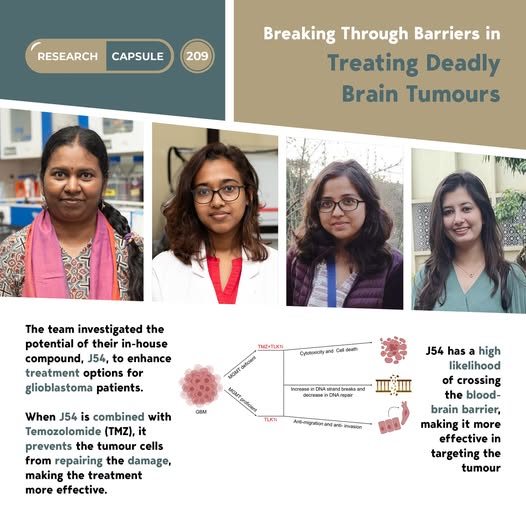
    The team used an in-house developed molecule to block TLK1, a DNA repair enzyme that helps brain cancer cells resist standard chemotherapy

    The molecule, J54, earlier proven effective in lab models of prostate and breast cancer, demonstrated encouraging results against glioblastoma.

    The successful inhibition of TLK1 activity by J54 revealed new insights into glioblastoma’s drug resistance mechanisms, paving the way for better treatment strategies

    Gandhinagar: Imagine a lock that changes its combination every time you try to open it. This is the common challenge faced by scientists and medical professionals whilst combating cancer. The deadly disease adapts to various therapies, surviving intense radiation, chemotherapy, targeted drugs, and more. This extraordinary ability of cancer cells aids them in developing resistance to various therapeutic avenues, and is especially detrimental in aggressive forms of cancer. Glioblastoma multiforme (GBM) is a prime example of an aggressive brain cancer, notorious for its resilience against treatment. At the Indian Institute of Technology Gandhinagar, researchers from the Cancer Chemical Biology Lab have been exploring the potential of the Tousled-like kinase 1 (TLK1), an enzyme known to repair damaged DNA, as a target for various types of cancers, including GBM. 

    TLK1 is part of the molecular machinery that facilitates the repair of DNA damage caused by carcinogens or cancer therapies, thereby promoting tumor cell survival. As a result, it has emerged as a potential therapeutic target to enhance the effectiveness of DNA-damaging treatments. Interestingly, research has indicated that in cancer cells, TLK1 seems to work overtime, patching up the DNA damage caused by anti-cancer drugs, boosting the survival of the diseased cells. The protein was shown to be an effective target of anti-cancer molecules in breast and prostate cancer, as indicated by previous studies conducted by the group individually and in collaboration with the De Benedetti Lab in LSU Health Shreveport (USA). “Conventional chemotherapy for GBM uses temozolomide (TMZ) to damage cancer cells’ DNA,” explained Dr Bhanu Priya, a PhD graduate from the Cancer Chemical Biology Lab and the first author of the study. Unfortunately, over time, some glioblastoma cells find ways to fix that damage or dodge it altogether. These “resistant” cells survive, multiply, and eventually render the drug ineffective. “Temozolomide resistance is one of the biggest challenges in glioblastoma therapy,” said Dr Sivapriya Kirubakaran, Professor at the Department of Chemistry and the Principal Investigator of the Cancer Chemical Biology Lab. “Once resistance sets in, the treatment options become extremely limited.”

    “We sought to understand the mechanisms behind this resilience to create better treatment strategies that circumvent this challenge,” added Dr Priya, who is currently working as a Business Development Specialist at Topia Life Sciences, a pharmaceutical company in Ahmedabad, Gujarat. Their findings, recently published in Scientific Reports, also highlighted the potential of an in-house developed small molecule inhibitor, J54, to re-sensitise resistant tumour cells to treatment. To understand these molecular mechanisms, the IITGN team created TMZ-resistant cancer cells by exposing them to increasing doses of the drug over six months. During this prolonged exposure, where tumours are subjected to repeated chemotherapy, most of the cancer cells are killed by the drug, but a few manage to survive. These surviving cells adapt over time, developing ways to protect themselves, repair damage, or avoid being destroyed, replicating the resistant glioblastoma condition within a lab setting. As a result, they are able to withstand further TMZ treatments, and also exhibit noticeable differences in shape, behaviour, and molecular activity. 

    Detailed molecular analysis revealed high levels of TLK1. “We hypothesised that this DNA repair protein enables resistant cancer cells to repair the very damage TMZ is supposed to cause, helping the cells survive genetic damage and thrive,” explained Dr Kirubakarn. The team tested this hypothesis by treating resistant glioblastoma cells with J54, a TLK1 inhibitor developed in-house by former PhD scholars of the Cancer Chemical Biology Lab. The addition of J54 crippled the resistant cell’s ability to repair its DNA, leading to damaged genome integrity and triggering cell death. The cells which were unaffected by TMZ suddenly became vulnerable to the J54 again and significantly lost their ability to move and invade surrounding cells, a critical trait in glioblastoma’s uncontrollable and deadly spread. 

    The potent inhibitory effect of J54 on the protein is aided by the molecule’s chemical structure. When designed, J54 was based on a class of compounds (phenothiazines) which have proven use in the treatment of psychosis. Thus, it can cross the blood-brain barrier successfully, bypassing the shield that prevents many drugs from reaching the brain. Yet crossing this barrier is only the first step. To be truly effective, a therapeutic molecule must also intervene in the complex molecular machinery that fuels cancer survival. 

    Shedding more light on the complexity of cancer pathways, Dr Priya remarked, “The molecular players associated with cancer work in tandem. Thus, it is sometimes necessary to target downstream partners of a critical enzyme to ensure the success of your therapeutic strategy.” In line with this, the team performed a series of experiments that showed J54 impairing the activity of TLK1 and its downstream protein partners. This disrupts the entire DNA repair network of the cancer cell and accelerates DNA damage and cell death. 

    “Despite the immense promise shown by J54 in our experiments, it requires further exploration through molecular and cellular studies to prove its safety and effectiveness,” affirmed Dr Priya. “We aim to conduct preclinical studies to evaluate J54 in animal models and investigate its potential in combination therapies.” These experiments could confirm if inhibiting TLK1 reverses GBM’s resilience, becoming a game-changer for patients who no longer respond to standard treatment. 

    If met with success, the implications stretch beyond glioblastoma. Cancers from the breast to the prostate use similar repair mechanisms to evade treatment. By homing in on TLK1, researchers could attack a vulnerability shared by many aggressive tumours. “Instead of inventing stronger drugs, we could get ahead of the disease by sabotaging the cancer’s survival toolkit,” exclaimed Dr Kirubakaran as she underscored the need to create better treatment outcomes for patients.

  • IITGN Researchers Develop Scalable Ultra-Thin Insulator for Advanced Semiconductor Devices

    Developed using titanium diboride-derived nanosheets, the material controls electrical flow in thin transistors with high precision while preventing energy loss

    The new material is produced through a simple, scalable room‑temperature method and offers performance suited for future high‑speed, low‑power semiconductor devices

    A few decades ago, computers capable of performing complex tasks filled entire rooms. Today, that same power fits in our pockets, built into devices lighter than a paperback. This leap has been driven by advances in semiconductor technology, where billions of tiny switches called transistors control the flow of electrical signals in everything from smartphones to satellites. With users demanding faster, lighter, and more energy-efficient electronics, designing materials that enable transistors to maintain their speed, efficiency, and reliability as they are scaled down has become a key challenge in semiconductor technology. In a recent breakthrough, researchers at the Indian Institute of Technology Gandhinagar (IITGN), in collaboration with Penn State University, have developed an ultra-thin insulating material that could address this challenge. Made from nanosheets of titanium diboride (TiB₂), the material offers high electrical performance and can be produced through a simple, scalable process, making it suitable for large-scale manufacturing.

    “The insulating layer, or dielectric in a transistor, is more than a passive barrier between its gate that regulates current and the semiconductor channel, which allows the current to pass through,” explained Dr Kabeer Jasuja, Professor at the Department of Chemical Engineering and the Principal Investigator of the research. “As transistors are miniaturised owing to the reduction in size of modern electronics, there is a need to design insulating materials thin enough for precise control of conductivity, yet robust enough to prevent electrical leakage that shortens the device’s lifespan.” According to the team, unlike conventional materials, the nanosheet-based material they have discovered is capable of striking this right balance. “It achieved an equivalent oxide thickness (EOT) of about two nanometres despite its physical thickness being more than fifty nanometres,” said Dr Saptarshi Das, Professor of Engineering at Penn State University, whose lab carried out the electronic studies. EOT is a standard way of comparing dielectric performance to silicon dioxide, the standard insulating material used in transistors. A low EOT means the dielectric can control current as effectively as a very thin layer, while the greater physical thickness provides mechanical stability and reduces leakage. “This unique combination provides the dielectric with the precision of an ultrathin insulator while maintaining the durability and leakage resistance of a thick film, a balance rarely achieved in semiconductor devices,” he added. 

    Speaking about the production of these TiB₂ nanosheets, Dr Anshul Rasyotra, first author of the study and former PhD student at IITGN, described the use of a simple, room-temperature process called dissolution–recrystallisation. As part of his IITGN Overseas Research Experience, Dr Rasyotra visited the lab of Dr Saptarshi Das at Penn State to conduct electronic studies on the nanosheets synthesised at IITGN. This method allowed them to transform bulk TiB₂ powder into sheets tens of thousands of times thinner than a human hair, without the need for high-temperature treatments or complex equipment. Dr Jasuja elaborated, “Beyond its simplicity, the method is cost-effective, environment-friendly, and scalable. Overcoming scalability has long been a major bottleneck in translating new dielectric technologies into real-world use. Our approach could enable wider adoption among research and for industrial groups that rely on large-area, cost-effective semiconductor manufacturing.”

    To evaluate the performance of the new dielectric material, the researchers tested it in transistors made with monolayer molybdenum disulfide (MoS₂), a two-dimensional semiconductor that has gained attention for its promising electrical properties. In these MoS₂-based transistors, a key performance parameter is subthreshold swing, which measures how efficiently the device can transition from the off state to the on state. A lower value means the transistor requires less voltage to switch on, making it more energy-efficient. The team achieved a subthreshold swing of 60 millivolts per decade in the transistors, which is the theoretical limit at room temperature. This means the devices can switch at the highest efficiency possible under standard conditions. They also recorded an on-off current ratio of one million at a supply voltage of just one volt, indicating precise control over current flow with minimal energy use. Furthermore, the leakage current was less than 0.0001 amperes per square centimetre, confirming the material’s strong ability to prevent unwanted energy loss. Reliability tests further revealed that the dielectric could withstand temperatures up to 125 degrees Celsius and endure over a billion switching cycles without performance degradation. Such resilience is crucial for real-world applications, where semiconductor devices are expected to operate for years under varying environmental and operational conditions.

    After demonstrating high electrical efficiency and low current leakage in individual MoS₂-based transistors, the researchers tested whether the dielectric could perform just as well in a form suited for industrial fabrication. They integrated the TiB₂ layer with MoS₂ films grown using chemical vapour deposition, a technique widely used in industry to create uniform, high-quality layers over large surfaces. The results confirmed that the material maintained its strong switching performance and minimal energy loss even on these large-area films, showing its potential to move seamlessly from laboratory prototypes to manufacturing environments. Their study has been recently published in the prestigious journal ACS Nano.

    According to Dr Jasuja, the work also aligns with the semiconductor industry’s ongoing “More Moore” strategy, which focuses on extending transistor miniaturisation to increase chip performance. “Our material offers a rare combination of high electrical performance, thermal stability, and manufacturing scalability,” he said. “It is a potential candidate for integration into advanced semiconductor manufacturing, enabling smaller, faster, and more energy-efficient devices.” With its balance of properties and practical production method, the material could help sustain the pace of innovation that has defined electronics for decades.

    The research team included Anshul Rasyotra, Mayukh Das, Dipanjan Sen, Zhiyu Zhang, Andrew Pannone, Chen Chen, Joan M. Redwing, Yang Yang, Prof Kabeer Jasuja, and Prof Saptarshi Das. 

    Journal Article:

    Nanosheets Derived from Titanium Diboride as Gate Insulators for Atomically Thin Transistors
    Anshul Rasyotra, Mayukh Das, Dipanjan Sen, Zhiyu Zhang, Andrew Pannone, Chen Chen, Joan M. Redwing, Yang Yang, Kabeer Jasuja, and Saptarshi Das
    ACS Nano 2025 19 (21), 19646-19658
    DOI: 10.1021/acsnano.4c18634

  • IITGN Researchers Develop An Open-Access Platform, Compiling Structures of Cancer-Linked Regulatory LncRNAs

    A Database of Cancer’s Molecular Mysteries

    The curated dataset could aid identification of cancer biomarkers, support diagnostics, and guide personalised treatment strategies

    Modern cancer research is advancing towards personalised medicine that addresses the unique molecular characteristics underlying an individual patient’s disease progression. To this end, scientists are exploring unorthodox and intricate regulatory layers that govern cancer cell behaviour. Among these, long non-coding RNAs, or lncRNAs, have attracted tremendous attention, considering their less-understood influence on cancer growth and progression. 

    To address the growing need for integrated studies on these regulatory RNAs, a team of researchers at IIT Gandhinagar (IITGN) has developed CanLncG4 (https://www.canlncg4.com), a comprehensive and user-friendly database that integrates structural and functional information on cancer-associated lncRNAs. The curated dataset available on CanLncG4 has been published in Scientific Data (Nature Portfolio) and offers a distinctive framework for studying the structure and behaviour of these RNA molecules.

    “Long non-coding RNAs are an incredible class of RNA. While most RNAs mediate the translation of genetic code into proteins, lncRNAs exert protein-like functions such as guiding gene expression, helping repair damage, or influencing how cells grow,” explained Dr Bhaskar Datta, Professor at the Department of Chemistry and the principal investigator of the study. Dr Datta, who works jointly with the Biological Sciences and Engineering department at IITGN, added that when these molecules become dysregulated, which means their normal activity or levels are disturbed, they can be correlated with or cause tumour growth. Recent research has also shown that many lncRNAs fold into distinctive three-dimensional shapes that modulate their interactions with other molecules and, in turn, their regulatory functions.

    One such shape is the G-quadruplex, or G4, a compact four-stranded structure formed when guanine, one of the four RNA building blocks, bonds in a particular pattern. These structures can act as tiny molecular switches that regulate how genes are expressed or silenced. When these switches malfunction, they can alter the behaviour of cancer cells. Understanding where and how these G4s form is, therefore, a critical step towards learning how lncRNAs influence cancer progression and drug resistance.

    Existing datasets and informatics resources pertaining to dysregulated lncRNAs typically focus on individual features, such as RNA-cancer associations or RNA-protein interactions. This makes it difficult to study how these factors work together to regulate cellular functions, thus limiting their usability. CanLncG4 addresses this gap by integrating cancer-lncRNA associations, G4-forming potential, subcellular localisation, and molecular interactions in a single, user-friendly platform. It compiles experimentally validated associations between over 6,400 human lncRNAs and 15 cancer types, including breast, lung, liver, and prostate cancers. The dataset provides information on each RNA’s G4-forming potential and its location within the cell. “The open-access web interface of our dataset further enhances its utility by allowing researchers to search, visualise, and download data or identify new G4 predictions for RNA sequences of interest,” said Dr Shubham Sharma, the first author of the study. “Through its unique functional integration and accessibility, CanLncG4 serves not just as a data repository but as a powerful platform for hypothesis-driven investigations into cancer-associated lncRNAs and their structural regulatory roles,” he added. 

    By linking G4-rich lncRNAs to specific cancer types and their expression profiles, CanLncG4 offers valuable insights into how RNA structure influences tumour behaviour. This information can help identify potential biomarkers for early detection or prognosis and guide the search for new therapeutic targets based on RNA structure.

    In addition to its biomedical applications, the dataset supports the growing field of precision medicine, where understanding the molecular architecture of individual tumours can inform tailored treatment strategies. “Our work builds on the growing recognition of non-coding RNAs in human health as highlighted by the 2024 Nobel Prize in Physiology or Medicine,” noted Dr Datta. “CanLncG4, as a structure-focused resource, highlights the role of RNA architecture in cancer and could accelerate both fundamental research and translational applications in the field.”

    The other authors of the study include Muhammad Yusuf Hassan, Noman Hanif Barbhuiya, Ramolia Harshit Mansukhbhai, Dr Chinmayee Shukla, and Deepshikha Singh.

  • Shell Chronicles of Ancient Kachchh: Archaeological clues reveal human habitation predating Harappan civilisation

    Long before the rise of the Harappan civilisation, the vast expanses of the Kachchh region in Gujarat were home to thriving prehistoric hunter-gatherer communities. A recent study by researchers at the Indian Institute of Technology Gandhinagar (IITGN), in collaboration with experts from IIT Kanpur (IITK), Inter University Accelerator Centre (IUAC) Delhi, and Physical Research Laboratory (PRL) Ahmedabad, has uncovered compelling archaeological evidence that pushes back the human presence in this region by at least five thousand years before the arrival of the Harappans.

    These early communities inhabited a mangrove-dominated landscape and relied on shell species (both bivalves like oysters and gastropods), naturally adapted to such environments, as a significant food source. “While British surveyors had previously noted shell accumulations in the area, these were not recognised as shell-midden sites, the heaps of discarded shells from human consumption,” explained Prof VN Prabhakar, an Associate Professor at the Archaeological Science Centre in the department of Earth Sciences at IITGN and lead investigator of the study. “Our study is the first to identify these sites, confirm their cultural significance, and establish a chronological context.” 

    To determine the age of these sites, the researchers used Accelerator Mass Spectrometry (AMS), a precise method for measuring the radioactive isotope values of Carbon-14 (C-14) from the shell remains, which is absorbed by all living organisms. After death, C-14 begins to decay and is reduced by half every 5,730 years. Measuring the remaining amount in the shell samples allows scientists to estimate how long ago the organism died. As atmospheric C-14 levels have varied over time, the results were calibrated using tree-ring data. Trees form one ring per year, and these tree-ring sequences can be matched and extended back over thousands of years, allowing scientists to construct an accurate reference timeline of atmospheric C-14. 

    “The shell samples collected from Khadir and nearby islands were analysed at PRL Ahmedabad, with support from Prof Ravi Bhushan and JS Ray, and at IUAC, Delhi, with help from Dr Pankaj Kumar,” mentioned Professor Prabhakar. The results confirmed that the midden sites date back to a period significantly earlier than the Harappan era, providing rare evidence of human settlement in this region from a much earlier time.

    These newly identified sites are the first of their kind to be documented in the Kachchh region, with a defined cultural and chronological context. According to the researchers, the findings also show similarities with coastal archaeological sites in the Las Bela and Makran regions of Pakistan and the Oman Peninsula, suggesting that early coastal communities across this broader region may have developed comparable strategies for food collection and survival.

    In addition to the shell scatters and deposits, the team discovered a variety of stone tools used for cutting, scraping, and splitting. Used cores from which the tools were manufactured were also found. “The presence of these tools and associated raw materials suggests that the communities engaged in the prolific manufacture of implements for daily tasks,” said Dr Shikha Rai, a postdoctoral researcher at IITGN and co-author of the study. The raw materials may have been sourced from Khadir Island, now known for housing the Harappan city of Dholavira, although other sources are also possible.

    The findings offer new insights into the region’s cultural evolution. They challenge the commonly held view that urbanism in Kachchh developed primarily under the influence of the Sindh region. “Instead of abrupt external influence, what we see here is a gradual, locally rooted process of adaptation and cultural development,” said Prof Prabhakar. “This accumulated knowledge of local geology, water resources, and navigation may have later helped the Harappans plan their settlements more effectively and engage in long-distance trade.”

    The researchers also believe that the shell middens and scatters will be important in palaeoclimate studies. Since climate change unfolds gradually over millennia and cannot be directly observed in the short term, natural materials like shells preserve signals that help reconstruct past environments. Previous studies at IITGN have already mapped the palaeoclimate of Khadir Island over the past 11,500 years. Further analysis of the recently discovered shell middens may contribute critical new insights into the climate conditions in which early humans lived.

    Beyond historical insights, the study offers timely relevance for the present. “Humans in the past adapted to different climatic zones and environmental challenges without the aid of modern technologies,” explained Dr Rai. “Their ability to observe, respond to, and live within their ecological limits is something worth learning from today, especially in the context of global climate change.” The team now aims to map cultural developments in Gujarat, from prehistoric to historical periods, to build a broader understanding of how human adaptation has evolved.

    The findings from this study were presented at the 17th Annual Workshop on South Asian Archaeology (Hartwick College and University of Chicago), the Seminar Series on the Archaeology of the Indo-Iranian Borderlands (Sorbonne University, Paris), and the 50th Annual Conference of the Indian Society for Prehistoric and Quaternary Studies (ISPQS), Raipur, all in 2025.

    The research team includes Prof Vikrant Jain of the Earth Sciences Department, IITGN; Prof Javed Malik and Debajyoti Paul of IITK; Pankaj Kumar of IUAC, Delhi and Mahendrasinh Gadhavi of L.D. College, Ahmedabad.

  • IITGN Researchers Develop Smarter Drugs to Overcome Treatment Resistance in Prostate Cancer

    The team developed 5n, a potential prostate cancer inhibitor, to disrupt cancer’s survival tactics through molecular sabotage

    The molecule disables TLK1, a repair protein essential for halting tumour recovery in prostate cancer cells, paving the way for new intervention strategies.

    Gandhinagar: Cancer often outpaces our treatments in a relentless biological arms race, evolving resistance faster than we can respond. Prostate cancer, which affects over 1.4 million men annually, typically begins as a slow-growing and treatable disease. However, it can become deadly once cancer cells develop resistance to therapy. For decades, doctors have relied on androgen deprivation therapy (ADT) to block testosterone, a hormone that fuels the growth of prostate tumours. While ADT effectively starves the cancer of testosterone, tumour cells have found clever ways to bypass this blockade, reactivating their growth despite low hormone levels. This advanced, treatment-resistant form of the disease is known as metastatic castration-resistant prostate cancer (mCRPC), and it is responsible for more than 375,000 deaths worldwide each year.

    A research team from IIT Gandhinagar’s Cancer Chemical Biology Lab recently identified a molecule that targets a key survival mechanism used by cancer cells to resist standard therapies. “Typically, cancer cells activate a protein called Tousled-like kinase 1 (TLK1), which acts like a molecular repair crew,” explained Dr Sivapriya Kirubakaran, corresponding author of the study and a Professor at IITGN’s Department of Chemistry. “When therapies like ADT damage cancer cells’ DNA, TLK1 swoops in to fix the breaks, enabling tumours to survive, proliferate, and evolve into mCRPC.” 

    Traditional therapeutics using TLK1 inhibitors have been limited to a small class of compounds known as phenothiazines. Initially developed as antipsychotic drugs, they show limited specificity and potency in prostate cancer therapeutics and are associated with undesirable side effects. The IITGN team sought to address this gap by creating a new class of inhibitors with better safety and effectiveness.

    We designed novel drug variants by modifying J54, our in-house designed phenothiazine-based TLK1 inhibitor,” said Dr Delna Johnson, first author of the study and a postdoctoral fellow at IITGN’s Cancer Chemical Biology Lab.  J54 was developed by former researchers of the lab and has shown effective action against mCRPC in previous studies. “We replaced J54’s core structure and systematically modified its other parts to create new molecules capable of forming stronger interactions with the TLK1 protein,” she added. 

    The research team synthesised two series of molecules and performed a comprehensive set of experiments to evaluate their biological activity. In in vitro (test tube) assays, several compounds showed promising inhibition of TLK1, with one molecule, named 5n, standing out as the most potent. Molecule 5n could inhibit TLK1 significantly better than J54, and, crucially, it did so without competing with ATP, the cell’s primary energy molecule. This non-ATP-dependent mechanism would ensure that 5n could block TLK1 activity even when cellular ATP is abundant, making it harder for the tumour to shrug it off. “By retaining J54’s morpholine-based side chain, a common chemical structure in many drugs, and adding an amide linker, our team sculpted a molecular decoy that disables the protein’s function without disturbing the rest of the cellular machinery,” noted Dr Vijay Thiruvenkatam, senior author of the study and an Associate Research Professor at IITGN’s Department of Biological Sciences and Engineering.   

    To assess whether these molecules would work in living systems, the researchers tested their compounds on the LNCaP cell line, a human prostate cancer cell line that still responds to hormones. The cells, routinely used as a testing model for early-stage prostate cancer, responded strongly to 5n. Even at low doses, the compound reduced the survival of cancer cells and dramatically inhibited their ability to multiply and form new tumours. In combination with Bicalutamide, a commonly used anti-androgen drug, 5n  showed a six-fold improvement in reducing cancer cell survival. Additional experiments revealed that this dual treatment triggered significant DNA damage in the cancer cells and activated apoptosis, a self-destruct mechanism reserved for when a cell recognises its own irreparable flaws. Importantly, 5n demonstrated far less toxicity toward healthy, non-cancerous cells, suggesting that it selectively targets cancer cells, which is critical for reducing side effects in potential therapies.

    Before any new drug reaches a clinic, it must pass through layers of testing: animal studies, safety trials, and human volunteers. Anticipating these steps, the team conducted in silico ADME (absorption, distribution, metabolism, and excretion) analyses. “We used computational models to predict how their compounds might behave in the human body,” mentioned Ms Shivangi Sharma, a former IITGN Master’s student currently pursuing her PhD at Texas A&M University, USA. Compound 5n passed these tests with favourable properties, including good oral absorption, drug-like properties, and a promising safety profile. Additionally, how 5n engages its target was also explored by using kinetic studies to map the methods by which the molecule alters TLK1’s behaviour in real-time. These insights are blueprints, guiding the design of future versions of the compound with even greater specificity and potency.

    With prostate cancer continuing to claim hundreds of thousands of lives each year, the need for more effective therapies is urgent. “By targeting a key protein involved in therapy resistance and designing a new class of molecules with precision and purpose, we have opened a new avenue for treating one of the most challenging forms of cancer,” says Professor Kirubakaran. The future direction of this research will involve further preclinical studies to assess safety and effectiveness in animal models, followed by potential clinical trials.

    The study, published in Bioorganic Chemistry, exemplifies how interdisciplinary research can set new benchmarks for cancer therapeutics.

  • Of Coral Reefs and Climate Change: How Carbonate Factories and Currents Shape Lakshadweep’s Future

    Lakshadweep, India’s only chain of coral atolls, is more than a stretch of tranquil beaches and turquoise waters. These low-lying islands are living geological records, built over millennia by the remnants of marine life. As climate change accelerates and sea levels continue to rise, it becomes increasingly important to understand what sustains these fragile landforms and how their natural balance may be shifting.

    To explore this, researchers from the REEFS Lab at the Indian Institute of Technology Gandhinagar (IITGN) studied the processes that form and maintain two of Lakshadweep’s atolls, Agatti and Kavaratti. Focusing on spatial patterns, sediment grain sizes, and dominant biological contributors, the study paints a detailed picture of how these islands are being shaped and reshaped by natural phenomena and biological as well as human activity. “Our goal is to map spatial variability in sediment type produced by different organisms and how the natural forcings and anthropogenic activity influence the sediment production, accumulation, and their redistribution across the length and breadth of the atoll lagoons and islands,” said Prof Pankaj Khanna, an Associate Professor in the department of Earth Sciences at IITGN and lead investigator of the study. “This helps us understand not only how islands are built, but how stable they are over time.”

    From corals, molluscs and algae to tiny shell-forming creatures like foraminifera, the ocean constantly produces and deposits calcium carbonate, the material that forms their skeletons and shells. As these organisms die, their remains accumulate and gradually break down into sand-sized particles. Over time, these sediments build up to create the very landmass of atoll islands like those in Lakshadweep. This continuous process of biological calcium carbonate production is referred to by geologists as a carbonate factory, a term that captures how marine life effectively drives the production of island-building material.

    The study investigated the spatial variation in the functioning of these carbonate factories across different geomorphic zones within the lagoons, such as patch reefs, seagrass meadows, and reef flats. Each of these zones supports distinct biological communities and plays a different role in sediment production and accumulation. “These zones not only influence the types of organisms that thrive there but also determine the nature and quantity of sediment that enters the lagoon system,” explained Shradha Menon, a PhD student and first author of the study. 

    Based on their fieldwork and analysis, the researchers found that more than 95 percent of the lagoon sediments in Agatti and Kavaratti consist of biogenic material, composed mainly of coral, mollusc, and foraminiferal fragments (less than 2 mm in size). These sediments, known as biodetrital grainstone, reflect a system primarily driven by biological productivity rather than inorganic processes. Interestingly, unlike these atolls, the ones in the Maldives show a greater contribution from calcareous algae such as Halimeda, marking a distinct difference in sediment sources across the atolls.

    The study, published in Marine Geology, further revealed how local hydrodynamics—waves, currents, and tides—interact with biological zones to shape the patterns of sediment transport and deposition. Lighter particles, like mollusc fragments, tend to travel farther, while finer materials settle in calmer parts of the lagoon. These patterns, combined with the lagoon’s physical structure, create zones of sediment accumulation and erosion. The shallow lagoons of Agatti and Kavaratti, with depths averaging just 2 to 4 meters, are particularly sensitive to these processes.

    Human activity has also left its mark on these delicate systems. In Kavaratti, particularly near a dredging channel, the researchers observed a noticeable shift in sediment composition, marked by a decline in coral clasts and an increase in contributions from Halimeda and molluscs. “We observed that coral clasts were less abundant in areas influenced by dredging,” said Ms Menon. “This suggests that anthropogenic disturbances, such as dredging and pollution, are altering the sediment-producing ecosystem, potentially affecting the island’s ability to sustain itself.”

    By placing their findings within a broader regional context, the team compared Lakshadweep’s sediment dynamics with those observed in other Indian Ocean atolls, particularly the Maldives. While the basic biological processes of carbonate sediment production are shared, local ecological and geomorphological differences lead to distinct patterns in sediment composition and distribution. “Our work highlights the importance of understanding site-specific factors,” said Saikat Kumar Misra, a PhD student and co-author of the study. “Even subtle variations in lagoon structure or water movement can significantly impact sediment production and transport.”

    As sea-level rise, coral bleaching, and expanding coastal development continue to pressure these ecosystems, the study underscores the need for locally informed conservation strategies. Safeguarding sediment-producing habitats such as coral reefs, patch reefs, and seagrass meadows is essential not only for marine biodiversity but also for the long-term physical stability of the islands. Sustaining these natural processes will help ensure that Lakshadweep’s islands remain resilient in the face of change.

  • New chatbot developed by IITGN Researchers empowers citizens to visualize air quality data from primary sources

    Every winter, North India is engulfed in a blanket of smog, bringing attention to the severe air quality crisis plaguing the region. Cities like Delhi consistently rank among the most polluted globally, with PM2.5 levels soaring far above safe limits. The health impact is devastating—causing respiratory ailments, cardiovascular diseases, and even premature deaths. According to estimates, air pollution claims over 6.7 million lives annually worldwide, with India bearing a significant share of this burden.

    While government agencies provide air quality data, the raw numbers often remain incomprehensible to the public. The question remains: How do we translate this information into actionable insights for ordinary people?

    Enter VayuBuddy, a breakthrough chatbot developed by IIT Gandhinagar researchers and collaborators. Designed to make air quality data accessible to everyone, this Large Language Model (LLM)-powered tool simplifies complex datasets into comprehensible insights.

    What is VayuBuddy?
    VayuBuddy leverages artificial intelligence to respond to natural language queries about air quality. For example, users can ask questions like, “What were the pollution levels in my city last month?” or “Which cities are the cleanest in winter?” The chatbot processes the query, analyzes data from India’s Central Pollution Control Board (CPCB), and delivers answers in plain language or through visualizations like graphs and heatmaps.

    “Our aim was to reduce the gap between raw data and public understanding,” says Prof. Nipun Batra, a lead researcher on the project. He adds, “VayuBuddy gives people a way to interact with air quality data in a user-friendly manner, empowering them to make informed decisions.”

    Why VayuBuddy Matters
    Air pollution doesn’t just harm the lungs; it infiltrates every aspect of life. From children missing school due to health issues to reduced workplace productivity, the ripple effects are vast. Yet, the lack of accessible tools prevents communities from fully grasping the severity of the problem or holding polluters accountable.

    Dr. Sarath Guttikunda, air quality expert and collaborator, highlights the broader implications: “Air pollution is a shared challenge, and tools like VayuBuddy can foster collective awareness and action. When people see clear, localized data, they’re more likely to advocate for cleaner policies.”

    Making Data Meaningful
    VayuBuddy stands out for its ability to generate insights tailored to various stakeholders. Policymakers can track compliance with air quality standards, parents can evaluate their children’s exposure, and journalists can report trends using ready-to-publish charts.

    Zeel Patel, one of the researchers, underscores the versatility of the tool: “By combining data analysis with AI-powered conversations, VayuBuddy opens up new possibilities for engaging with air quality data. It’s designed to work for everyone, not just experts.”

    Looking Ahead
    The team behind VayuBuddy is already planning its next steps. Expanding its capabilities to cover more pollutants like NO2 and ozone, integrating multilingual features, and incorporating datasets from other countries are all on the horizon.

    Even as they pursue these ambitions, the researchers remain focused on the core mission: making air quality insights accessible, actionable, and impactful.

    A Cleaner Tomorrow
    The fight against air pollution is a collective endeavour, and tools like VayuBuddy are empowering individuals and communities to play their part.

    As Dr. Guttikunda aptly puts it, “By transforming complex data into actionable insights, VayuBuddy has the potential to drive meaningful change, one conversation at a time.”

    With innovations like VayuBuddy, the hope for a cleaner, healthier future seems a little brighter.